This is the thirteenth post in a series about life on the Outer Cape during World War II.
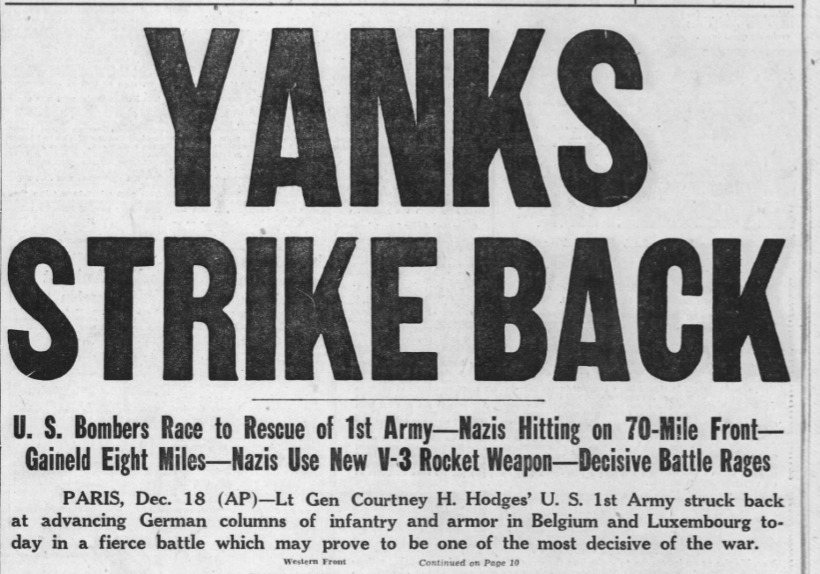
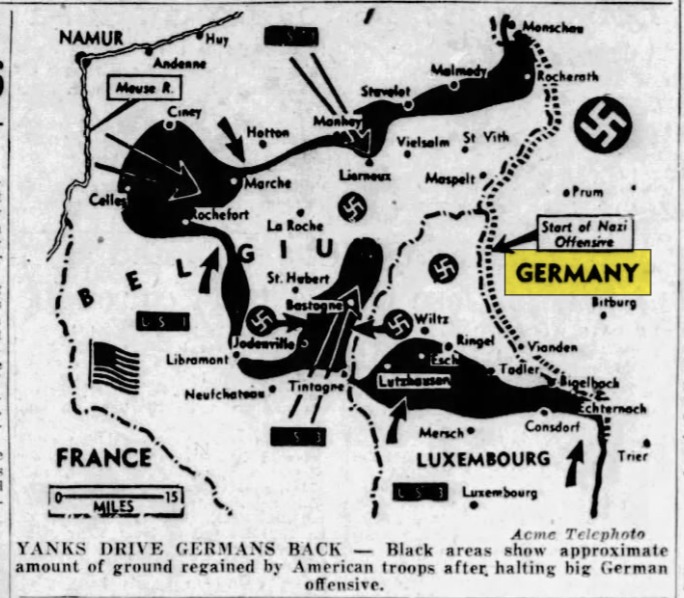
The winter of 1945 had to have been a hard time for many Cape Codders. The Battle of the Bulge had been raging in Europe since mid-December, and, although reporting was tightly controlled, newspapers published accounts of the fighting. While there were over 100,000 casualties: deaths, wounds, or men reported missing in action, the War Department’s Office of War Information was directed to hide this information from the American public. Even the massacre of 84 American prisoners of war near the Belgian town of Malmedy was revealed, although the details were not.
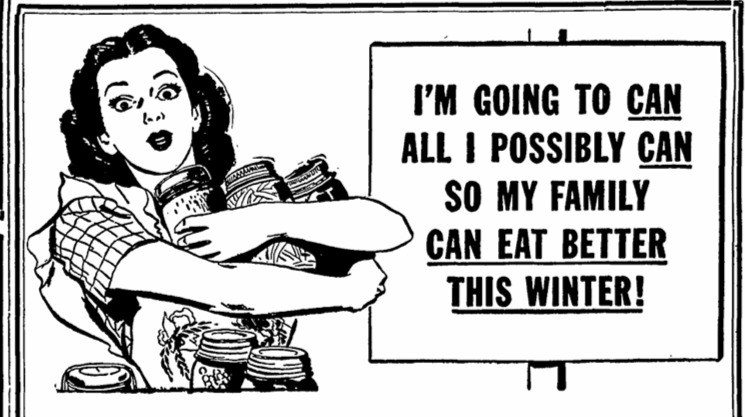
The Barnstable Patriot published a story about warnings from the OPA (Office of Price Administration) that there would be ongoing shortages of canned foods, butter, tires, gas, building materials, fuel oil, clothing, blankets, and more. Later in the year, there were complaints that there was not enough meat available on the Cape, and people were sick of eating fish.
The Provincetown Advocate appears to have more war-related announcements of local soldiers winning commendations, being injured, killed, or missing in action. The January 18th issue printed a detailed story of a Provincetown soldier’s experience with the 313th Combat Engineers Battalion in Italy, and a note about a missing Private from Truro. On January 4th, Joe O’Brien, Mary Heaton Vorse’s son, a photographer’s mate with the U.S. Coast Guard attached to the War Information Office in London, wrote a long account of D-Day. On January 25th, an Army Private with the 398th Infantry Regiment described the fighting in Eastern France. Reports in February covered the award of a Purple Heart to a Provincetown soldier, and another reported on fighting in Luzon.
Wellfleet’s Paul Chavchavadze was serving as a Red Cross Field Representative in France. He received a special commendation from General Patton for his work with a Displaced Persons Center in April of 1944, helping with Russian refugees. The details of what he did remained a secret.
At its January meeting, the Wellfleet Board of Trade announced a plan for a survey of Wellfleet and its “future economic possibilities.” The announcement said that the group “expected 15% of the Wellfleet population” would return after the war. Citizens were asked to send ideas to the Survey at P.O. Box 63.
In early February, it was announced that the U.S. Navy would occupy Camp Wellfleet with a Navy unit attached to the Naval Auxiliary Air Facility in Hyannis. Lieutenant Sumner Whittier, who had been in charge of a Navy unit in Provincetown, was the commanding officer. Lt. Whittier was a member of the Massachusetts State Senate. When the Navy began operations in South Wellfleet in 1944, there had been no formal announcement.
The February Town meeting in Wellfleet was pro forma, with the tax rate kept at $28.80, schools funded at $18,000, the fire department at $2,640, and streetlights at $2,150. There was no police department
In February, author John Dos Passos was shot down in the plane he was in near Manila in the Philippines. He was on assignment with Life Magazine covering the fighting there. He survived the event, as reported in the Provincetown Advocate in early March.
In March, two Navy airmen and one seaman lost their lives in Cape Cod Bay, off Provincetown, when their plane crashed into the superstructure of a Navy Auxiliary Target Vessel, used to tow other targets. One of the bodies was not recovered until late March, when a fisherman found it.
Fishermen under 30 were reminded in March that, because of the ongoing need for troops, they may not receive an automatic deferment for working in an essential industry.
Sergeant Wiles of Wellfleet wrote home about fighting in Iwo Jima with the Army Air Force.
Throughout the winter and early spring, there was continuous coverage of both the boys’ and girls’ high school basketball teams. The Provincetown boys played the Navy men of the U.S. S. Schenk, which was based there, raising funds for the Red Cross.
Wellfleet was assigned a quota of 35 people to travel to Hyannis to donate blood at the Mobile Blood Unit as part of a Cape campaign in March. There was an “urgent need for the men on the savagely contested fighting fronts.”
In April, a United Nations Clothing Collection campaign was announced, the first of many, as Cape Codders were asked to donate “stressed clothing” for people in Europe.
Provincetown’s Commander Donald MacMillan, renowned Arctic explorer, returned from active service with the U.S. Navy, as reported by the Provincetown Advocate. An expert on the frozen lands of the north, he received a commendation from the Navy Secretary for his work. The Commander had to reconstruct the map of Greenland’s inland and northern regions because the Germans had stolen the original version from the Danish Government. Four planes under the Commander had completed aerial mapping of Greenland’s icecaps for use during the war, and, it was said, the maps would be of greater value after the war for transatlantic air routes for commercial carriers.
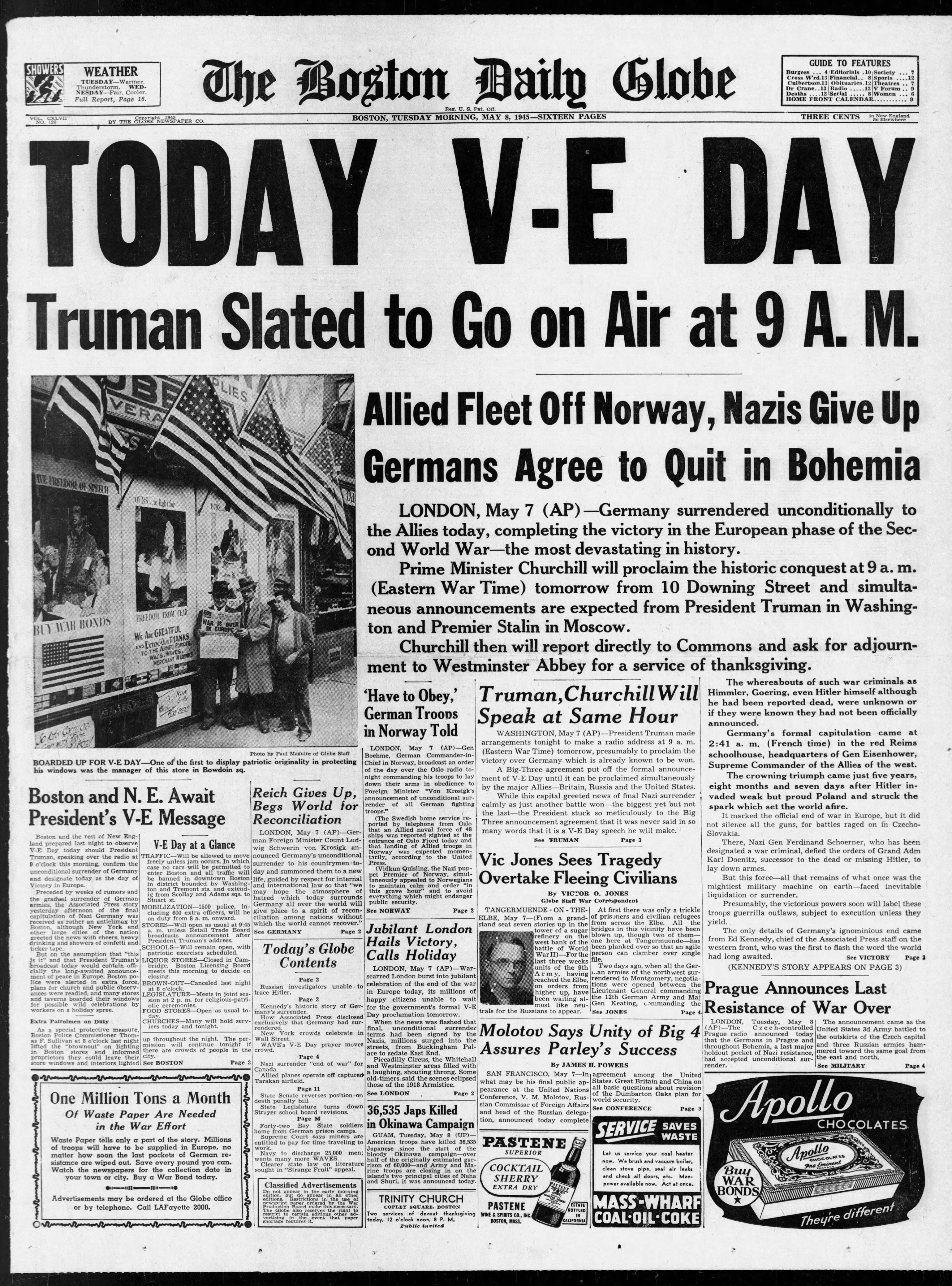
Finally, after months of reporting on the war in Europe, on POW camps, concentration camps, uncertainties over Hitler’s death, the unconditional surrender of Germany was formally announced by President Truman early in the morning of May 8, 1945. Liquor stores and bars were closed, and churches were open. The Provincetown Advocate of May 10 reported V-E Day, noting that the church bells rang and that some churches held services that day or in the evening. The Pilgrim Monument was relit, as were the Statue of Liberty in New York Harbor and the Washington Monument in the District of Columbia. The same issue reported another death of an Army lieutenant from Provincetown.
On May 9, the Massachusetts Committee of Public Safety disbanded all local units, removed the telephone service used to report incidents, and returned supplies to the towns.
The Provincetown Advocate also reported on May 10th, Wellfleet’s Naval Lieutenant Commander Charles Frazier’s award of the Bronze Medal for his work in April in Okinawa, establishing a model camp and speedy restoration of order “among the terrorized citizens,” and in organizing “efficient working parties to correct sanitary deficiencies.” Frazier’s Naval unit was attached to the 10th U.S. Army, whose commanding officer made the award.
In the same issue, the Advocate printed a letter from Frazier. He revealed his relationship to Wellfleet in this paragraph:
You know, I was proud to represent the town and in my egotistical way felt I could do it some good. Many people used to consider what they thought was an apparent lack of ambition, and couldn’t understand why a young fellow would waste his time in so small a community. I think they were all wrong and just didn’t appreciate the feeling of satisfaction that one can get from being a part of waking an old town from its lethargy and helping it realize its splendid potentialities.
Later in May, it was reported that 100 people in Wellfleet were waiting for telephone service. The Lower Cape sent five tons of clothing to Europe, with the parishioners of Wellfleet’s Lady of Lourdes church donating 885 pounds, and the children of Wellfleet’s Consolidated School donating 1407 pounds.
Memorial Day was solemn, as the war dead were remembered and everyone contemplated the continuing war in the Pacific. Soldiers returning from the European theater waited to see if they would be sent there next.
The Provincetown Advocate continued to publish stories from soldiers and sailors about the war and their experiences. The paper often referred to Outer Cape residents as“Cape Enders.”
Frank Shay of Wellfleet was given a byline in the Provincetown Advocate of June 28 for a long article about the celebration planned in Wellfleet in mid-July on the life and times of Captain Lorenzo Dow Baker and his ability to bring bananas to America. Church suppers, a concert, and a dance at Legion Hall were planned. And, it is hoped, that the town will have a few bananas on hand. Or, he wrote, they would all be singing the famous song.

 South Wellfleet, Massachusetts