This is the fifth post in a series about life on the Outer Cape during World War II.
January in Wellfleet started off with an appeal to donate to the fund for the preservation of Colonial Hall, with $2,000 needed by the time of the February Town Meeting. Professor Carey Melville, a Mathematics Professor at Clark College in Worcester, led the effort.
Camp Edwards gained its full complement of men, and a Community Liaison Committee reached out to all the outer Cape towns, asking a representative to attend a meeting in Orleans. Throughout this year, there was reporting on how the military reached out to the civilian population to help maintain servicemen’s morale. The U.S.O. was formed, and plans announced to build USO Centers in Falmouth, Bourne, and Hyannis.
Citizenship classes were held in Provincetown.
Selectman Frazier reported, once again, that there were no arrests in Wellfleet in 1940, but the town “was no Garden of Eden.”
The Barnstable Patriot had a front-page story on January 9th, “Army to Stage Big Signal Rehearsal,” announcing that later in the month, 28 men and 20 officers of the First Aircraft Warning Company of the US Army Signal Corps would hold a practice operation in Truro. Lt. Albert Gilardi commanded the unit. The story announced that several civilian volunteers recruited from the American Legion would play a role in the operation, stationed at listening posts around the Cape. The “antique tower” at Highland Light, named the Jenny Lind Tower today, would be used as a civilian observation post. The Army signaling unit operated on “Town Hall Hill.” (Truro’s Town Hall Hill, also named “Storm Hill,” was where the Town Hall, formerly the Union Hall, is located. It was originally built to house fraternal organizations. The two-story frame building is near the First Congregational Parish.)
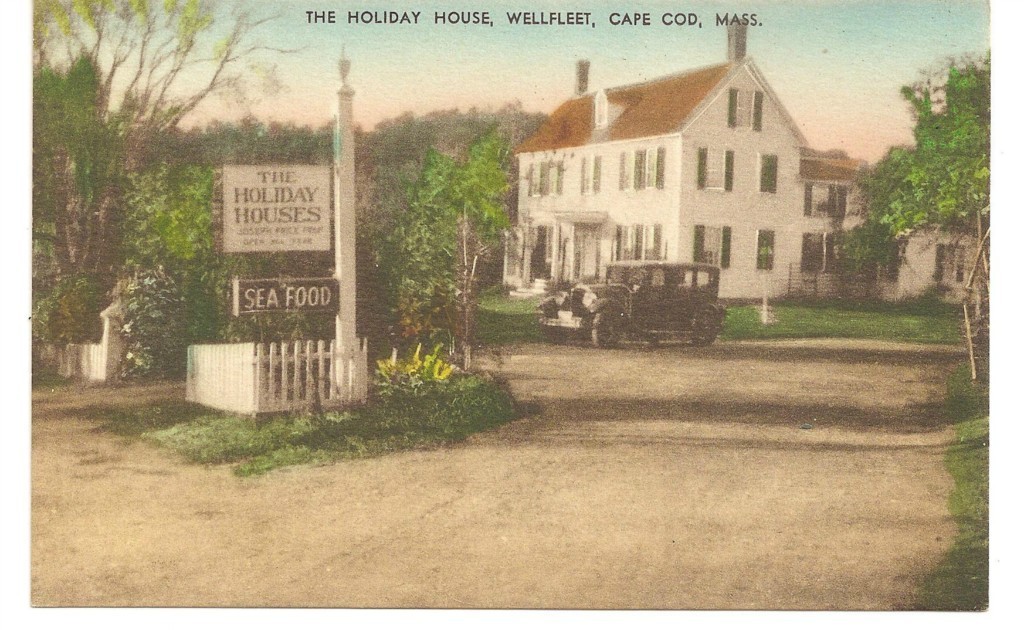
School was suspended for a week because of an outbreak of scarlet fever. Two of the men working on the Signal Corps project in Truro, staying at Wellfleet’s Holiday House, caught it and had to be quarantined.
The town elected Henry Atwood to the Board of Selectmen and Oliver Austin as Town Meeting Moderator. The Town Meeting began at nine in the morning, with a noon break for lunch of baked ham with pineapple, vegetables, and gingerbread with whipped cream for dessert. The town voted to build a new fire station at the intersection of Commercial and Bank Streets. The town also funded the digging of fire wells throughout the town to ensure the fire department had adequate water.
At the Wellfleet Board of Trade meeting, Charles Frazier railed against the letter he had received from the Commissioner of the Massachusetts Department of Public Works, informing him that the upgrading of Route 6 was in the six-year plan. Frazier demanded action, saying that it was part of building the defense of the state, that the suicide curves of the old highway were a danger to the movement of the military. He described an Army convoy going through Wellfleet, taking up two-thirds of the roadway, tail-lights obscured by gun carriages, making the operation a menace to other traffic.
Frazier was also closely watching the process of getting federal funding to dredge the Wellfleet Harbor channel and to build an anchorage basin. Congress had approved the project buy the President vetoed it. Frazier was sure the project would be presented again as a defense project. The project was included in the Omnibus Rivers and Harbors bill in October, but the actual work did not begin until the 1950s.
The meeting went on to other topics: helping with the recreational needs of the Army men working in Truro. Lieutenant Gilardi attended the meeting, confirming that his operation in Truro was secret.
James L. Twombley of the U.S. Geological Survey attended and reported that the new topographical map of Wellfleet would be ready in a year. The Yarmouth Register reported that work on the map began in 1936 and would be an update of the 1885 map. Aerial photos had been taken, and every hill over ten feet had been plotted.
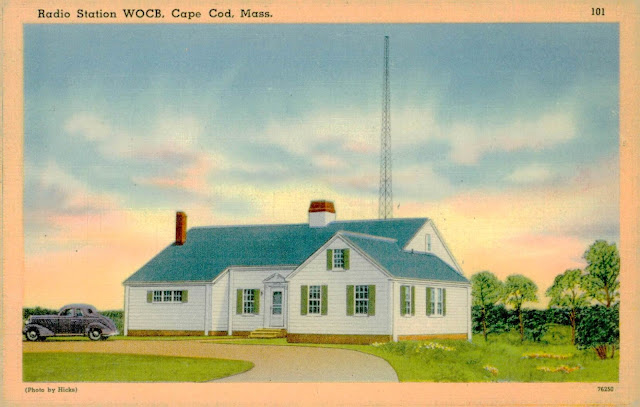
The editors of the Provincetown Advocate and The Barnstable Patriot, Paul Lambert and Jack Johnson, attended the meeting. There were complaints that the Cape’s “daily paper, The Cape Cod Standard Times, did not carry the schedule of the new radio station, WOCB.
WOCB was growing in popularity around the Cape. Charles Frazier was on the air in late February, supporting a new idea in the state legislature to move Labor Day to mid-September to extend the tourist season.
The Barnstable Patriot reported that the upcoming tourist season would be a good one, with the addition of Camp Edwards and the lack of travel to Europe.
In February, Wellfleet artist Edwin Dickinson announced that he would head a committee to raise funds for Herbert Hoover’s work in Europe—the “Committee of Food for Five Small Democracies”—to fight famine in Finland, Norway, Holland, Belgium, and “Central Poland.” This was just one of many efforts to help Europe and Great Britain, which were in the news on the Cape. Wellfleet had an active Red Cross Committee of women who sewed and knitted clothing at a space provided for them at the Wellfleet Savings Bank.
The February Board of Trade meeting honored four Outer Cape women: writers Susan Glaspell and Phyllis Deganne, Mrs. Worthington, founder of the Cape Cod Fishnet Industry, and Wellfleet philanthropist Mary K. Lawrence.
“The grippe, “what we call the flu today, infected several people, including the Army men staying at the Holiday House.
The Selectmen sent a letter to Lieutenant Gilardi, thanking him for the fine conduct of his men during their time in Truro and their stay at the Holiday House.
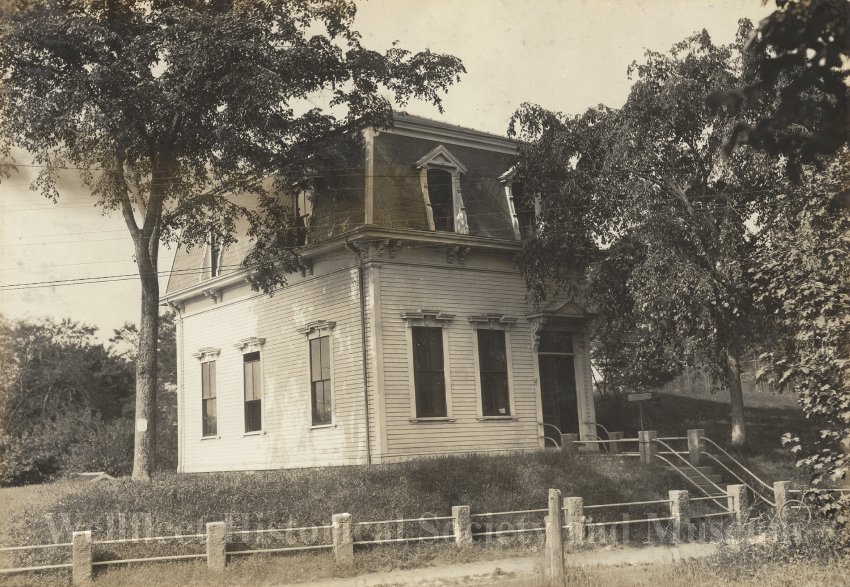
The work on creating the town Hall we know today got underway. Old buildings around the site were removed, including one called the “Trading Post,” which would be rebuilt close by. One of the old buildings was described as a former school moved there from “Pucker Town.”
In March, the fifth call of the Barnstable Selective Service Board was made. Four young men of Wellfleet were called: Wilfred Trahan, Edwin Hall, Howard Kemp Snow, and Zenas Adams. Earle Rich was already serving in the Navy, based at Charlestown Navy Yard. Typically, those took a train from Hyannis to Boston, where they had physicals and were then inducted. They were then furloughed for 14 days, when they would be ordered to report for training.
At the Board of Trade meeting, it was announced that the Program Committee had taken over public relations for the town, in the hope that favorable press coverage would attract “the kind of people we want.” The town was developing a new assessor’s map and finding available land since the L.D. Baker Estate was liquidating some of its extensive holdings. President Oliver Austin commented, “We don’t want the kind of honky-tonk summer people that go to Provincetown, nor do we want the ‘Privy Hill’ type of overnight camp in North Truro, nor the cheap summer boom business of Hyannis.” He noted that Wellfleet wanted artists and writers who could work anywhere, noting that the town needed a planning board and zoning regulations. During this year, the group painted the town’s street signs, kept the rubbish barrels emptied, sponsored the Boy Scouts, held a dinner for the High School’s basketball players, and a Christmas party for children at the end of the year.
In April, Wellfleet installed its first traffic light, a blinking yellow at the junction of Route 6 (now named Main Street) and Commercial Street. Also in April, Wellfleet joined 15 other towns to fight a destructive fire at Brewster’s Sea Pines School.
In April, Frank Shay gave his first Tuesday afternoon WOCB show, “Wellfleet On Air,” where he described many new projects in town that were creating a good impression of the town’s growth. The Colonial Hall, the new fire station, the new Trading Post store, and the upcoming telephone exchange were underway. He reported on Jack Hall’s new baby, on Edmund Wilson, and his wife’s purchase of a home on Money Hill, and on Princess Xenia of Russia visiting her sister, Nina Chavchavadze. He reported that the second Town Fair would be held in the summer and that the State Department of Agriculture was providing funds for prizes.
On May 27th, President Roosevelt, in his Fireside Chat Number 17, declared a National Emergency with strong language about the Nazi’s plan for world domination. Buried in the talk was an announcement that he had “set up the machinery for civilian defense.” He appointed New York City Mayor Fiorello LaGuardia to head the office, along with Mrs. Roosevelt. Now the outer Cape towns would all begin organizing and training for their civilian defense and emergency preparedness efforts, as Commander Turnbull had done earlier in Provincetown.
Two other events in May brought more military action to the Outer Cape. On May 29th, the Barnstable Patriot announced that an “outermost listening post” would soon be set up in North Truro, close to Highland Light. Workmen were scrambling to build a new road out to the site. It was declared to be the “first established military post in the outer Cape section.” This appears to be the project that Lt. Gilardi worked on during the winter months. In the Provincetown Advocate, there was only a brief mention that 1200 soldiers were to be established in the “Highlands Reservation.”
I did further research to understand what was happening in North Truro. Indeed, the First Aircraft Warning Company of the U.S. Army Signal Corps, activated in Truro in May 1941, was the beginning of the organized Aircraft Warning Service (AWS) on the East Coast. There were two parts to the Truro story. First, the Army had set up SCR-270 radar sets, the equipment mentioned in the January reference to this operation. The SCR-270 was one of the first early-warning radars. The activation in Truro resulted from escalating tensions in Europe and the need for a North American air defense system.
As AWS was set up, the Army turned to the American Legion to provide civilian volunteers trained in plane spotting and reporting. I did not find any specific mention of Wellfleet American Legion men participating in the project in Truro, but I am certain they might have. The Provincetown Advocate reported in December 1941 that American Legion men staffed a watch post at Beach Point, giving a detailed account of what it was like to spend eight hours on duty in this dismal spot. These posts were set up all over the East Coast; in Massachusetts, they were said to be six miles apart, which would place another near Nauset Beach. I did not find any mention of activity there. The AWS program became inactive in 1944 as the threat of an air attack diminished.
In 1947, The Cape Codder published a classified advertisement offering five barracks buildings for sale in North Truro under the Surplus Property Act of 1944. The site was referred to as the “Highland Light Air Warning Site No. 5.”
In the 1950s, North Truro became home to the North Truro Air Force Station, a significant Cold War radar installation. Additional experimental radar work went on in South Truro for long-range search radar.
I was also curious about Lieutenant Girardi and his military career. Born in Ohio, he was commissioned as a second lieutenant upon graduating from the University of California, Berkeley, with a degree in electrical engineering. The equipment he worked on in Truro was sent to Hawaii, and on December 7, 1941, it provided a warning of the Japanese attack. He was awarded a Legion of Merit in 1943 for his work in setting up the station at Truro and for setting up radar sites on the entire coast of Iceland. He was at D-Day in 1944 as Major Gilardi of the 555 Signal Warning Battalion. He served in the Military Occupation Government of Germany and helped reassemble German communications. After the war, he married, had three children, worked for technical companies, and died in New Jersey in 1997, another member of what we have come to call “the greatest generation.”

 South Wellfleet, Massachusetts